


The Mandalika, 10 November 2026 – Tourism destination development requires not only well-prepared facilities and infrastructure but also qualified human resources and local attractions that can enrich the tourist experience. At The Mandalika, these efforts were realized through the implementation of the InJourney Hospitality House (IHH) Mandalika Batch III on 3–5 November 2026, involving 52 students from SMK Negeri 1 Pujut in villages surrounding the area, as well as the Mandalika Art Performance held on 6 November 2026 as a platform for appreciating the arts and culture of Lombok.
In collaboration with InJourney, PT Pengembangan Pariwisata Indonesia (Persero), also known as InJourney Tourism Development Corporation (ITDC), organized IHH Mandalika at the VIP Deluxe area of the Pertamina Mandalika International Circuit. The program provided basic hospitality skills training for local youth, equipping them with the knowledge to understand and seize opportunities in the tourism industry. The training covered various topics, including hospitality principles, effective communication, tourism awareness, and heartfelt service to visitors.
One of the key aspects of this program was the involvement of local communities as drivers of knowledge transfer. The training featured Malik Abdul Aziz, a resident of Kuta Village, The Mandalika, who had previously participated in InJourney's Training of Trainers (ToT) program and was subsequently entrusted with the role of trainer. Malik's involvement demonstrates the continuity of the competency development process, as community members who have previously received training begin taking an active role in sharing their knowledge with others in their communities.
Malik Abdul Aziz, IHH Mandalika trainer and resident of a village surrounding The Mandalika, stated that his involvement in the program provided an opportunity to apply the knowledge he had gained while sharing his experience with the younger generation in his area.
“Through this program, I have the opportunity to share the knowledge and experience I previously gained through InJourney's training. I believe it is important for young people around The Mandalika to understand that hospitality is not merely about serving tourists, but also about developing a friendly attitude, good communication skills, and a sense of responsibility toward the destination's environment. I hope the knowledge shared through this program will serve as valuable preparation for participants to seize opportunities in the tourism sector,” said Malik.
General Manager of The Mandalika, Pari Wijaya, stated that strengthening the capacity of local communities is an essential part of building a tourism ecosystem that provides opportunities for surrounding communities to grow alongside the destination.
“The growth of The Mandalika as a tourism destination must go hand in hand with improving the capabilities of the surrounding communities. We specifically targeted students from SMK Negeri 1 Pujut because they are young individuals preparing to enter the workforce and have the potential to become frontliners in the tourism industry. In the future, they will play a direct role in delivering services while shaping visitors' impressions and experiences of the destination. Through InJourney Hospitality House, we aim to equip them with hospitality skills from an early stage so they will be better prepared to meet industry demands. The involvement of local residents as trainers also demonstrates how acquired knowledge can be continuously developed and shared with other members of the community,” said Pari.
On the final day of the training, participants also had the opportunity to visit the Paddock and Pit Lane areas of the Pertamina Mandalika International Circuit. This experience allowed participants to become more familiar with the circuit's facilities while broadening their understanding of the potential for sports tourism development at The Mandalika.
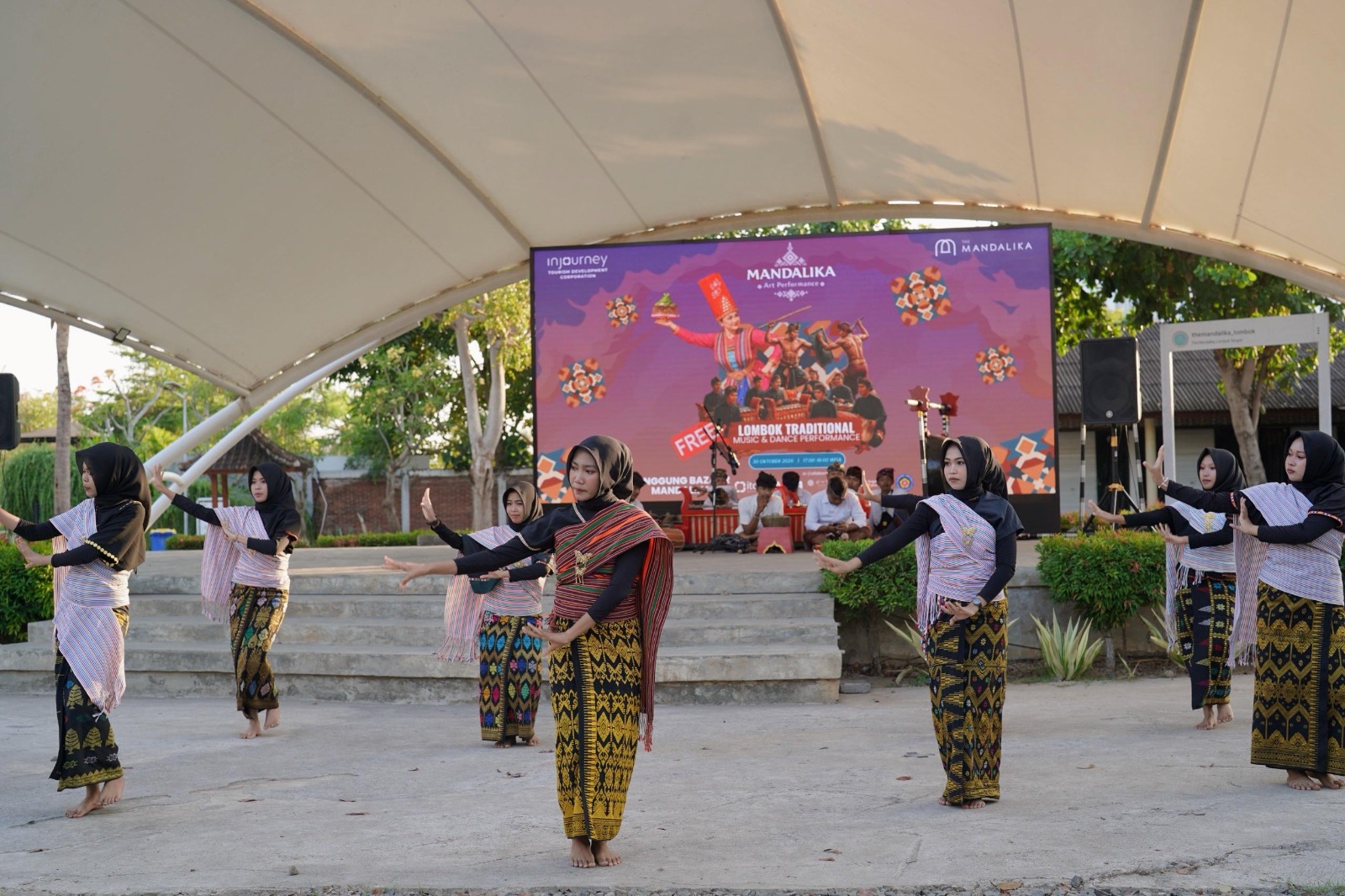
In addition to developing community competencies, efforts to strengthen local potential are also being carried out by providing opportunities for regional arts and culture to become part of the tourism experience. This initiative was realized through the Mandalika Art Performance, held on Friday, 6 November 2026, at the Mandalika Bazaar Stage.
Featuring traditional Lombok music and dance performances that were open to the public and tourists free of charge, the event provided a platform for local artists to showcase their talents while introducing the region's cultural richness to visitors. Various performances were presented, including the Kipas Dance by Raja Hotel Kuta Mandalika, the Barugaq Elen Dance by SMKN 1 Pujut, the Sasak Harmoni Dance by Nurul Iman Islamic Boarding School, as well as the Gandrung Dance and gamelan music by Sanggar Mong Kencana, one of ITDC's community-supported art groups. The involvement of various art groups and institutions further enriched the cultural attractions while strengthening The Mandalika's identity as a tourism destination that highlights local potential and wisdom.
Pari Wijaya added that the richness of local arts and culture is one of the elements that can shape The Mandalika's character and distinguish it as a tourism destination.
“Destination development cannot rely solely on modern facilities and tourist attractions. Local identity must also be present and become an integral part of the experience offered to visitors. Lombok has a wealth of arts and culture that can serve as a distinctive attraction for The Mandalika. Through Mandalika Art Performance, we aim to provide opportunities for local artists to showcase their work while introducing regional culture to tourists. In this way, the development of the area can also create broader opportunities for the potential and creativity of local communities,” added Pari.
Through the development of young people's competencies and the strengthening of arts and cultural attractions, ITDC continues to encourage The Mandalika to grow as a destination that not only offers tourism attractions but also provides opportunities for local communities to participate and develop. This approach forms part of the company's efforts to build an integrated tourism ecosystem by connecting destination growth, community capacity development, and the preservation of regional cultural potential.