



The Nusa Dua, 15 May 2026 – Amid the rapid growth of the tourism sector, InJourney Tourism Development Corporation (ITDC) continues to strengthen its commitment to implementing sustainability principles through the Protecting Nature approach as part of the company’s sustainability framework. Through the development of Green Open Spaces (RTH) in The Nusa Dua, Bali, and The Mandalika, West Nusa Tenggara (NTB), ITDC integrates climate resilience, energy efficiency, waste and water management, as well as biodiversity protection into a sustainable tourism ecosystem. This initiative reaffirms that tourism destination development is not solely focused on economic growth, but also on environmental harmony and long-term quality of life improvement.
ITDC Commercial & Marketing Director, Febrina Mediana, emphasized that Green Open Spaces (RTH) play a strategic role in enhancing the quality and competitiveness of tourism destinations. According to her, RTH is not merely a landscape element, but also an ecological infrastructure that contributes significantly to improving air quality, regulating microclimate temperatures, and strengthening resilience against climate change.
“The strengthening of Green Open Spaces at The Nusa Dua and The Mandalika is aimed at creating healthy, comfortable, and sustainable destination ecosystems, beyond just visual aesthetics. Through the development of nature-based tourism experiences such as outdoor activities, wellness, and coastal recreation, RTH becomes an essential component in promoting healthy lifestyles, strengthening the connection between people and nature, and enhancing the overall tourism experience. This approach also reinforces ITDC’s commitment to maintaining destination sustainability and strengthening the long-term competitiveness of Indonesia’s tourism sector,” she stated.
At The Nusa Dua, ITDC manages approximately 97 hectares of Green Open Space, representing around 27% of the total 359.7-hectare area. Of this total, 43 hectares have been planted with more than 5,700 trees from 138 vegetation species, including 32 local and endemic tree species. The existence of these green spaces plays an important role in strengthening biodiversity, preserving the area’s landscape character, and functioning as the “lungs” of the destination by supporting microclimate regulation, improving air and environmental quality, and providing comfortable and inclusive public spaces.
In addition, The Nusa Dua demonstrates a tangible contribution to decarbonization efforts through integrated biodiversity-based landscape management and sustainable utility systems. Since 1979, The Nusa Dua has implemented a lagoon system capable of processing up to approximately 10,000 m³ of wastewater per day, which is then reused for irrigation of green areas, supporting water efficiency and the implementation of a circular water system concept. Based on recent studies, the total carbon sequestration capacity of The Nusa Dua area reaches 16,279.57 tons of carbon, with an average total biomass of approximately 102.6 tons per hectare and carbon content of around 48.2 tons C per hectare, equivalent to approximately 176.8 tons CO₂e per hectare. These figures reflect the significant capability of the area’s vegetation to absorb and store carbon while maintaining ecosystem balance amid high tourism activity.
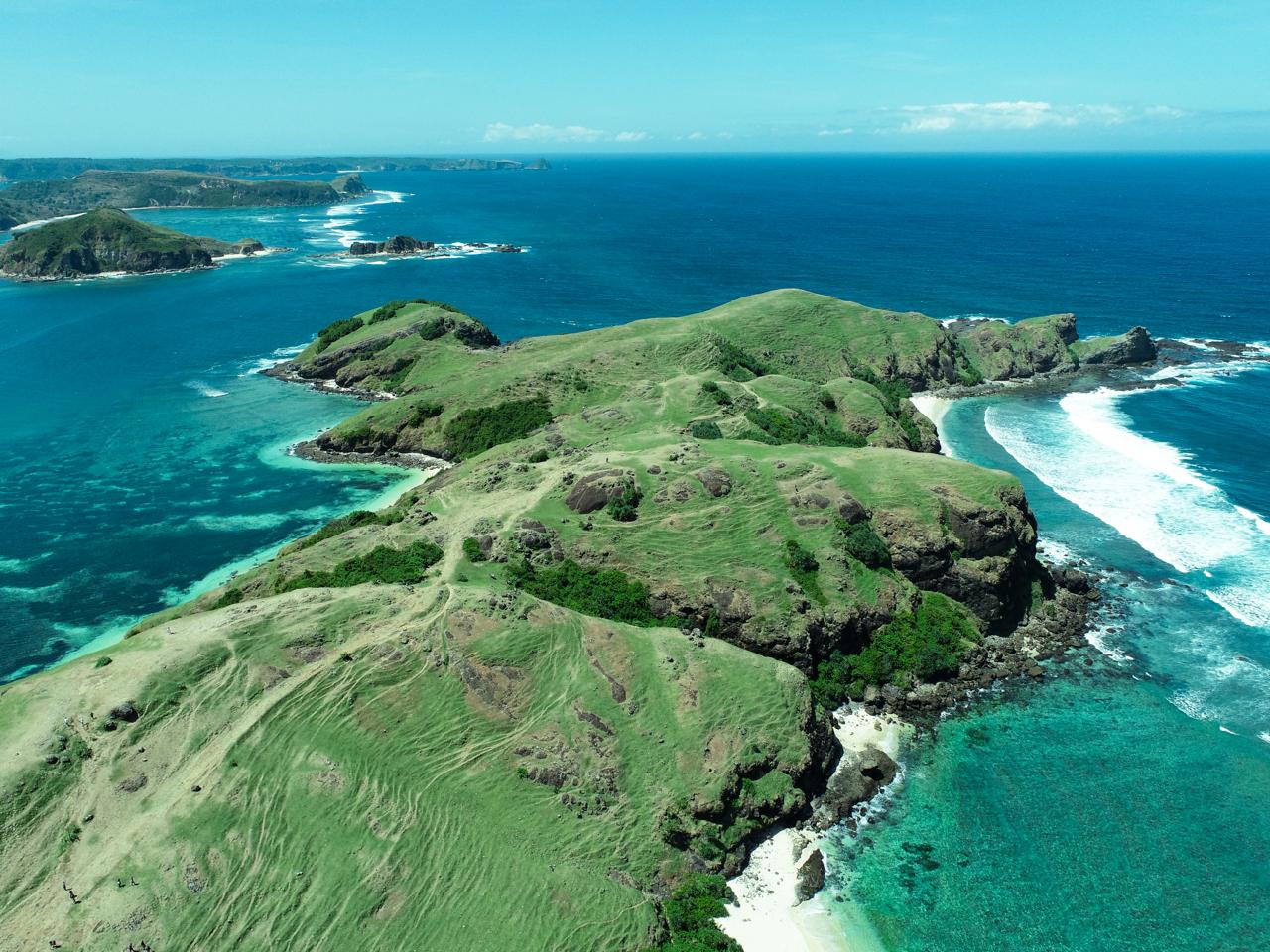
Meanwhile, at The Mandalika, sustainable tourism development is implemented through the management of an approximately 1,175-hectare area, with Green Open Space allocation reaching 363 hectares or around 30% of the total area. Of this amount, around 19% has been actively managed as part of environmental conservation and ecosystem enhancement efforts. As part of strengthening the coastal ecosystem, more than 10,400 trees were planted throughout 2025 through environmental rehabilitation programs. This effort continues in 2026 with the planting of 15,000 mangrove trees along coastal areas as a strategic measure to strengthen natural protection against abrasion while improving coastal habitat quality.
The development of The Mandalika also integrates the concepts of green space and blue space, combining vegetation areas with water elements such as beaches, lagoons, and conservation zones. This approach not only creates an aesthetically pleasing and functional landscape, but also plays a strategic role in enhancing climate resilience, including abrasion mitigation, improved water absorption capacity, and coastal ecosystem protection.
Through this approach, the development of The Mandalika is not only oriented toward tourism economic growth, but also delivers tangible added value for environmental sustainability and the long-term preservation of coastal ecosystems.
“Through the integration of ESG (Environmental, Social, and Governance) principles, ITDC positions Green Open Spaces as strategic green infrastructure that not only strengthens destination competitiveness, but also maintains ecosystem balance, enhances climate resilience, and supports the development of sustainable, resilient, and low-carbon tourism in Indonesia,” concluded Febrina.